News I 2025 Shanghai Green Aviation Forum Successfully Held, Advancing Sustainable Aviation Fuel and a Net-Zero Future

On October 29, 2025, the 2025 Shanghai Green Aviation Forum was successfully convened in Shanghai. Guided by the Shanghai Municipal Transportation Commission and co-hosted by the Innovation Center for Energy and Transportation (iCET) and the Shanghai Environment and Energy Exchange, the forum was jointly organized by the Peking University Institute of Energy, the China Clean Transportation Partnership (CCTP), and supported by the Energy Foundation China.
Under the theme “Charting Low-Carbon Flight Paths: Collaboration, Innovation, Decision-Making,” the forum brought together nearly 100 participants from China, the United States, and Europe. Government officials, international institutions, researchers, and representatives from the aviation industry gathered to exchange perspectives on sustainable aviation fuel (SAF) and green aviation development, exploring policy trends, market outlooks, and international cooperation pathways.
Background
As the global aviation sector advances toward its net-zero emissions goals, SAF is emerging as a critical driver of the industry’s green transition. Aviation accounts for roughly 2–3% of global CO₂ emissions, with limited alternatives and high decarbonization challenges. Compared with electrification and hydrogen technologies, SAF can be used as a drop-in replacement for conventional jet fuel and can reduce lifecycle carbon emissions by over 80%, making it the most scalable decarbonization solution for the coming decades.
As the EU’s “ReFuelEU Aviatio”n regulation takes effect and the International Civil Aviation Organization (ICAO) pushes forward with its CORSIA mechanism, global aviation fuel structures are undergoing significant transformation. China, as one of the world’s largest and fastest-growing aviation markets, is rapidly advancing SAF development across the entire value chain, with active progress in feedstocks, technology pathways, standards, and demonstration projects.
However, challenges remain due to insufficient alignment among policies, markets, and investment. To promote international coordination, iCET established the International Green Aviation Dialogue Mechanism, aiming to create a platform that connects major markets across China, the U.S., and Europe, facilitating collaboration in policy, technology, and market development.
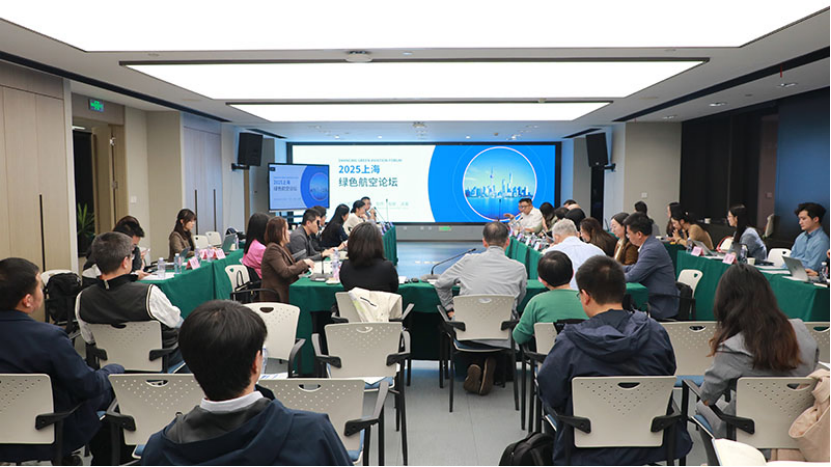
The forum opened with remarks from An Feng, Honorary Director of iCET, who highlighted the event as the inaugural activity of the International Green Aviation Dialogue Mechanism, marking the official launch of this cross-regional cooperation platform. He noted that the forum sets a solid foundation for future dialogues and opens a new chapter in international cooperation.
Dai Qi, Level-Two Inspector of the Shanghai Municipal Transportation Commission, delivered the opening address. He emphasized that Shanghai regards green aviation development as a core pillar of its international hub strategy and continues to enhance infrastructure capacity and service quality. Looking ahead, Shanghai will focus on low-carbon aviation equipment, airport energy system upgrades, and green engineering construction, promoting high-quality green aviation development and building an aviation hub with global influence. He stressed that this forum provides an important platform for long-term cooperation and collaborative innovation between Shanghai and international partners.
The forum opened with remarks from An Feng, Honorary Director of iCET, who highlighted the event as the inaugural activity of the International Green Aviation Dialogue Mechanism, marking the official launch of this cross-regional cooperation platform. He noted that the forum sets a solid foundation for future dialogues and opens a new chapter in international cooperation.
Dai Qi, Level-Two Inspector of the Shanghai Municipal Transportation Commission, delivered the opening address. He emphasized that Shanghai regards green aviation development as a core pillar of its international hub strategy and continues to enhance infrastructure capacity and service quality. Looking ahead, Shanghai will focus on low-carbon aviation equipment, airport energy system upgrades, and green engineering construction, promoting high-quality green aviation development and building an aviation hub with global influence. He stressed that this forum provides an important platform for long-term cooperation and collaborative innovation between Shanghai and international partners.

Keynote Speeches: Policies and Technologies Driving the Green Aviation Transition
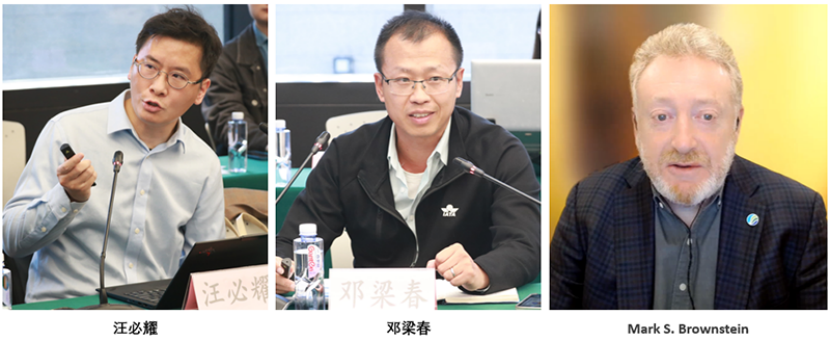
Wang Biyao, Technical Director of the Sustainable Aviation Fuel Research Center at the Second Research Institute of CAAC, introduced China’s SAF technology standard system and development trends, noting that the industry has entered an accelerated phase. He emphasized future efforts in advancing FT and PtL technologies and strengthening full-chain standardization to support green aviation transition.
Deng Liangchun, Senior Manager of External Affairs & Sustainability, North Asia at the International Air Transport Association (IATA), reviewed the latest global progress on aviation decarbonization. She outlined industry goals in improving fuel efficiency, achieving carbon-neutral growth, and reaching net-zero emissions by 2050, with particular attention to the implementation and significance of CORSIA. She underscored that SAF remains the most critical enabler of green aviation.
Mark S. Brownstein, Senior Vice President at the Environmental Defense Fund (EDF), shared international experience from the Sustainable Aviation Buyers Alliance (SABA). He noted that the global conversation has shifted from “Is SAF feasible?” to “How do we implement SAF at scale?” Through third-party certification and global collaboration, SABA promotes clean energy transition and accelerates aviation decarbonization.
Panel Discussions: Exploring SAF Collaboration and Regional Opportunities
Two panels structured the forum:
“International Green Aviation Dialogue” — addressing global SAF supply–demand trends and policy dynamics:“Shanghai’s Strategic Opportunities in SAF Development & Global Cooperation Pathways” — identifying Shanghai’s role, opportunities, and challenges as an international aviation hub.
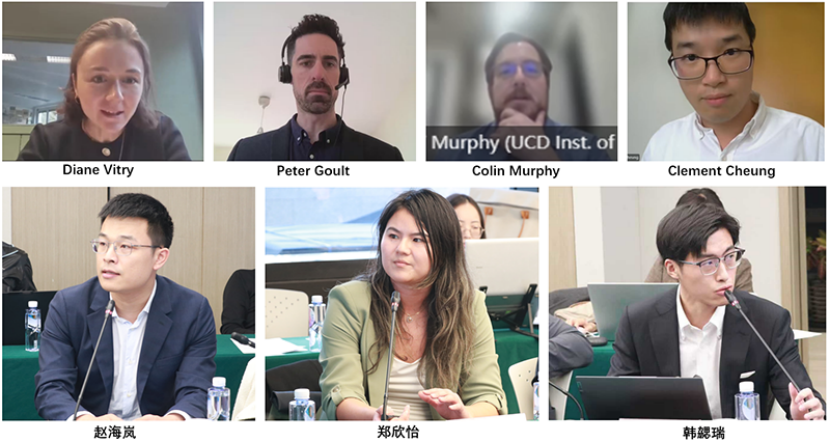
Diane Vitry, Aviation Program Director at Transport & Environment (T&E), outlined Europe’s decarbonization framework, highlighting three pillars: SAF mandates, Emissions trading and Non-CO₂ impact monitoring as the foundation for achieving Europe’s net-zero aviation target by 2050.
Zheng Xinyi, Senior Researcher at the International Council on Clean Transportation (ICCT), summarized U.S. SAF policies centered on voluntary mechanisms and tax credits. She emphasized the importance of lifecycle analysis (LCA) models in calculating subsidies and highlighted ongoing challenges in feedstock pathways and GHG verification.
Clement Cheung, Assistant Manager at the Business Environment Council (BEC) in Hong Kong, introduced Hong Kong’s dual strategy of “defense and advancement,” promoting corporate–government collaboration and strengthening Greater Bay Area SAF supply chain cooperation.
Peter Goult, Senior Director at Project Sky Power, predicted e-SAF will become the dominant fuel pathway after 2030. Despite strong market incentives in Europe, project investments have yet to materialize. He stressed Sky Power’s mission of commercializing and scaling e-SAF.
Colin Murphy, Associate Director at the UC Davis Policy Institute for Energy, Environment and the Economy, emphasized that biofuels remain an indispensable transitional solution but face uncertainties in feedstock availability, land use, and sustainability. He recommended risk-aware policy design and accelerated development of PtL and synthetic fuel technologies.
Zhao Hailan, Deputy General Manager of the Shanghai Airport Investment Co., Ltd., shared that the Shanghai Airport Group is advancing biomass-based and PtL pathways through innovation and demonstration projects to position Shanghai as a leading global hub for SAF R&D and deployment.
Han Xierui, Researcher at the Shanghai Academy of Development and Reform, argued that Shanghai possesses strategic hub advantages and green development opportunities. He suggested enhancing supply security, promoting high-value SAF and hydrogen industrial clusters, and innovating green finance mechanisms.
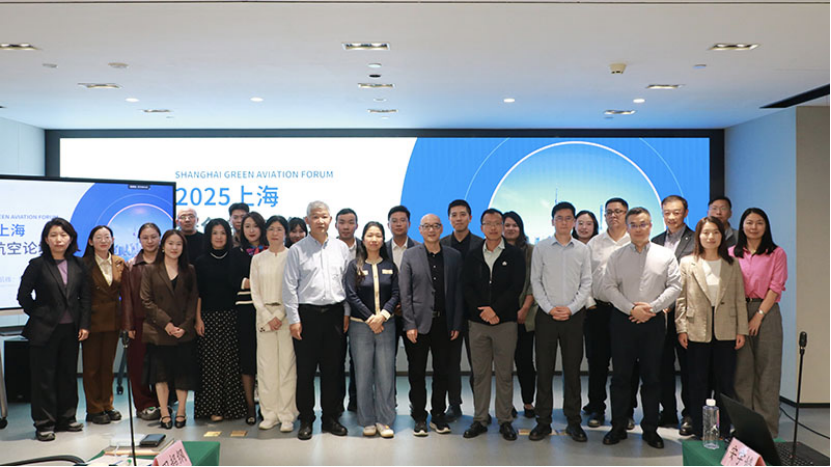
The roundtable session was moderated by Li Jin, Deputy General Manager of the Shanghai Environment and Energy Exchange. More than ten experts—including Chang Shiyan, Associate Researcher at the Institute of Energy, Environment and Economy of Tsinghua University; Ding Yiru, Director of the Office of the Institute of Energy at Peking University; Guo Xin, Senior Expert at the Sinopec Research Institute of Petroleum Processing; An Yuting, Biomass Energy Specialist at the China Quality Certification Centre; Ren Jieqiong, Head of Sustainability and Environment Affairs at Airbus China; Yin Jizhou, Business Manager of the Hydrogen–Ammonia–Alcohol Industry Center at Guangdong Mingyang Wind Power Industry Group Co.,Ltd; Lu Jing, Senior Business Development Manager at Honeywell Sustainable Technology Solutions China; Yue Meiqi, Director of the Synthetic Biology R&D Center at Shougang Lanze Tech; Wu Lanting, Lead Analyst for SAF Strategy and Commercialization at Envision-group; Wang Shen, CEO of SAFPAC Limited; Liu Shutong, Founder of MotionEco; Tian Chaogang, Nanjing District Manager at Lufthansa Cargo; and Cheng Zhaopeng, General Manager of Shanghai Wenji Biotechnology Co., Ltd.—shared their practical experiences and cooperation prospects from across the SAF value chain.

Together, the experts called for leveraging policy guidance, technological innovation, and coordinated market mechanisms to accelerate the scaled deployment of SAF in China.
The forum concluded with strong consensus: SAF is the key pathway to aviation decarbonization. Progress requires coordinated actions across policy, technology, and markets, alongside strengthened international cooperation to accelerate commercialization and global adoption.
In his concluding remarks, Dr. An Feng emphasized that despite challenges in price, supply, and market structure, the forum has consolidated common understanding and provided clear direction for SAF development. He reiterated that iCET will continue acting as an independent third-party bridge, connecting international expertise and driving innovation in policy, technology, and markets to jointly advance the future of green aviation.
Conclusion: Building a New Chapter for Net-Zero Aviation
The trilateral China–U.S.–Europe dialogue mechanism launched by iCET, the North Bund International Shipping Forum, and the Shanghai Environment and Energy Exchange carries deep strategic significance. By integrating policy research, technical standards, and market mechanisms, it aims to elevate global collaboration on sustainable aviation.
More than a professional forum, this event stood as a model of high-level, cross-sector, cross-border dialogue. Looking ahead, iCET will continue working with partners to develop multi-tiered and multi-disciplinary exchanges under the International Green Aviation Dialogue Mechanism, strengthening policy coordination and industrial cooperation in green aviation and clean fuel development across China, the U.S., and Europe. Together, these efforts will support high-quality SAF development and accelerate the global green aviation transition.