News & Events
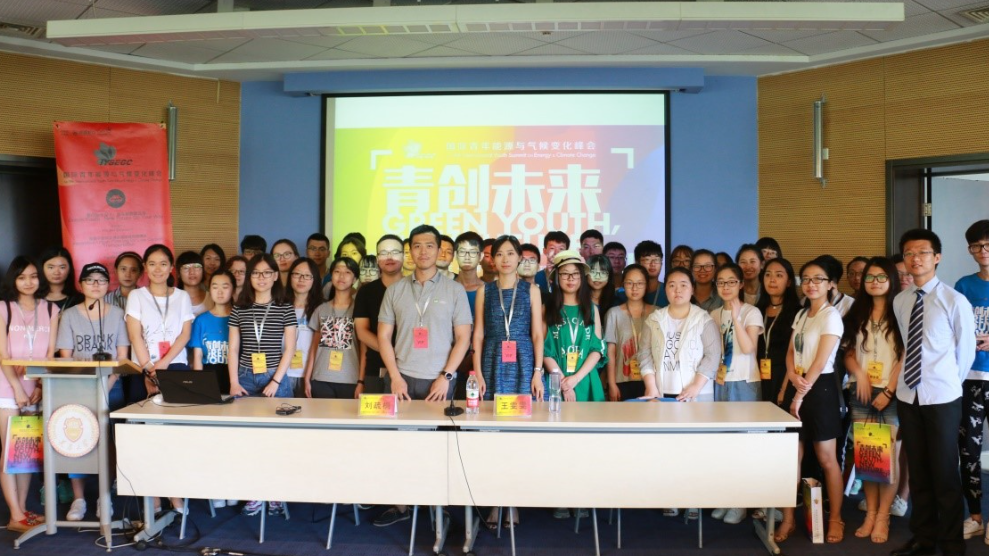
iCET presented China’s NEV development and challenges at IYSECC 9
iCET was invited to present its work at the 9th International Youth Summit on Energy and Climate Change (IYSECC 9.0) hosted by Tianjin University on July 10-12. iCET’s Clean Transportation Project Manager, Ms Emma Wang, introduced China’s NEV development and challenges and had an interactive discussion with the students.
Read More…
iCET was invited to present its new-data in transport policy project at a World Bank GEF organized event in Chengdu
On June 23rd, iCET was invited to present its new-data in transport policy project at the “Chengdu City Congestion Reduction Policy and Measures” seminar part of the World Bank GEF Large-City Congestion and Carbon Reduction project (CP3). Ms Emma Wang, iCET’s Clean Transportation Project Manager shared the highlights of the novel UBER case study for assessing actual fuel consumption (FC) and emission factors (EF).
Read More…
iCET Clean Transportation Program Research Analyst
iCET Clean Transportation Program Research Analyst.we welcome you to join us!
Read More…
iCET co-authored the paper entitled Global bioenergy sustainability initiatives and implications for policy making in China
iCET Clean Transportation Senior Manager, Kang Liping, co-authored an academic paper on global bioenergy sustainability initiatives and implications for policy making in China with associate professor Dr. Chang Shiyan of Tsinghua's Institute of Energy, Environment and Economy. The paper aims at stablishing systematic criteria and indicators to provide clear and executable guidelines China’s sustainable bioenergy development. The paper builds on regulation promulgated in several regions in the world as well as works of international institutions, such as the Global Bioenergy Partnership (GBEP) and the International Organization for Standardization (ISO).

ICE vehicle energy efficiency improvements should be highlighted along with NEV in pursuit of CAFC target
In April, Ministry of MIIT, NDRC and MOST jointly issued the "Long-Term Development Plan for the Automobile Industry," reaffirming the importance of technological advancement for improving energy efficiency. During the 12th Five Year Plan (FYP), the development of new energy vehicles played an important role, as was demonstrated by economic policies (e.g. subsidies and research grants) and regulatory policies (manufacturing requirements). Yet energy efficient vehicles technologies did not keep a similar pace, perhaps partially because of the relatively non-stringent vehicle fuel consumption (FC) requirements. This brief highlights some major issues srrounding standard implementation, a prep form our annual CAFC report.
Read More…