News I iCET Successfully Hosts the Fourth International Green Aviation Dialogue
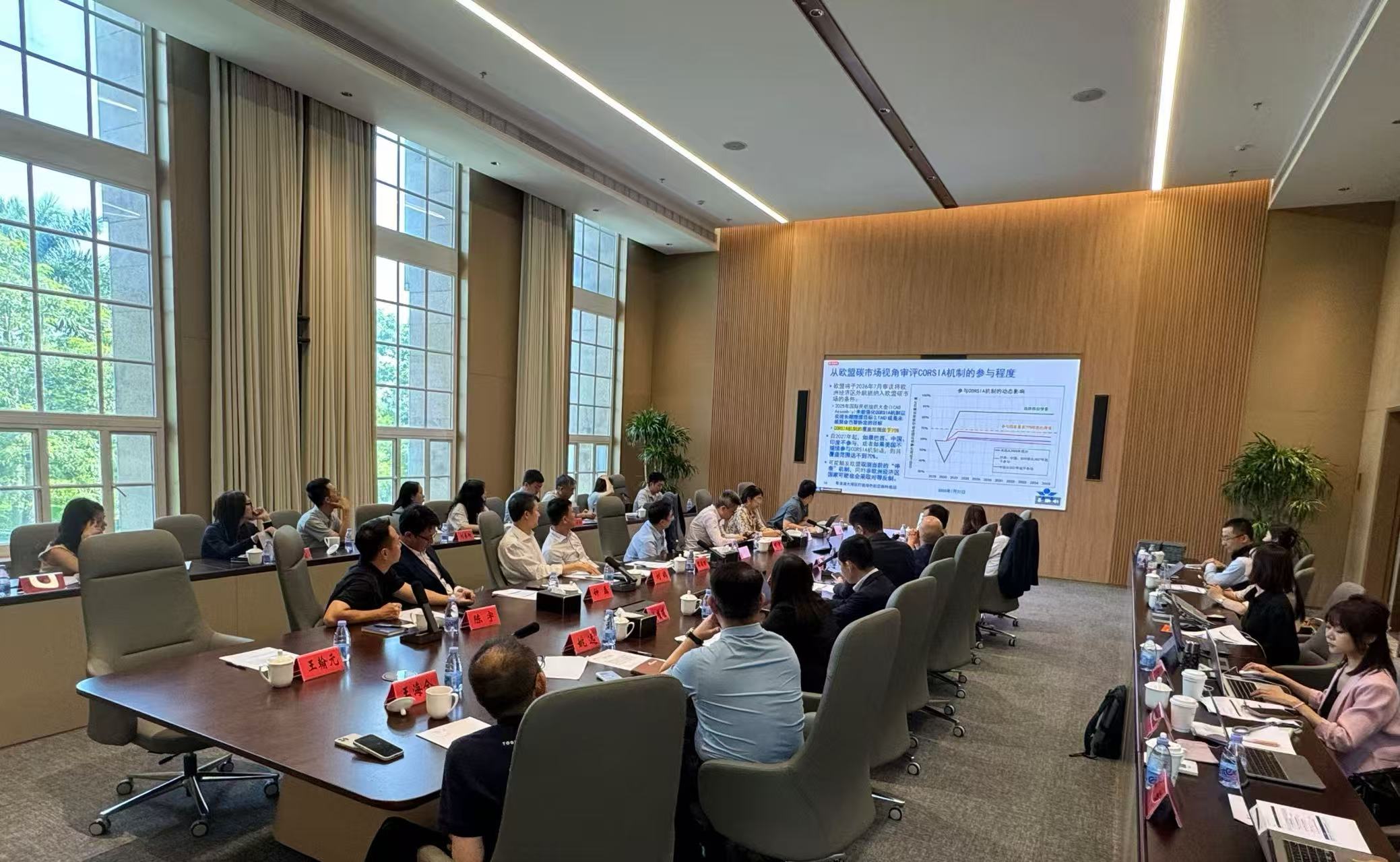
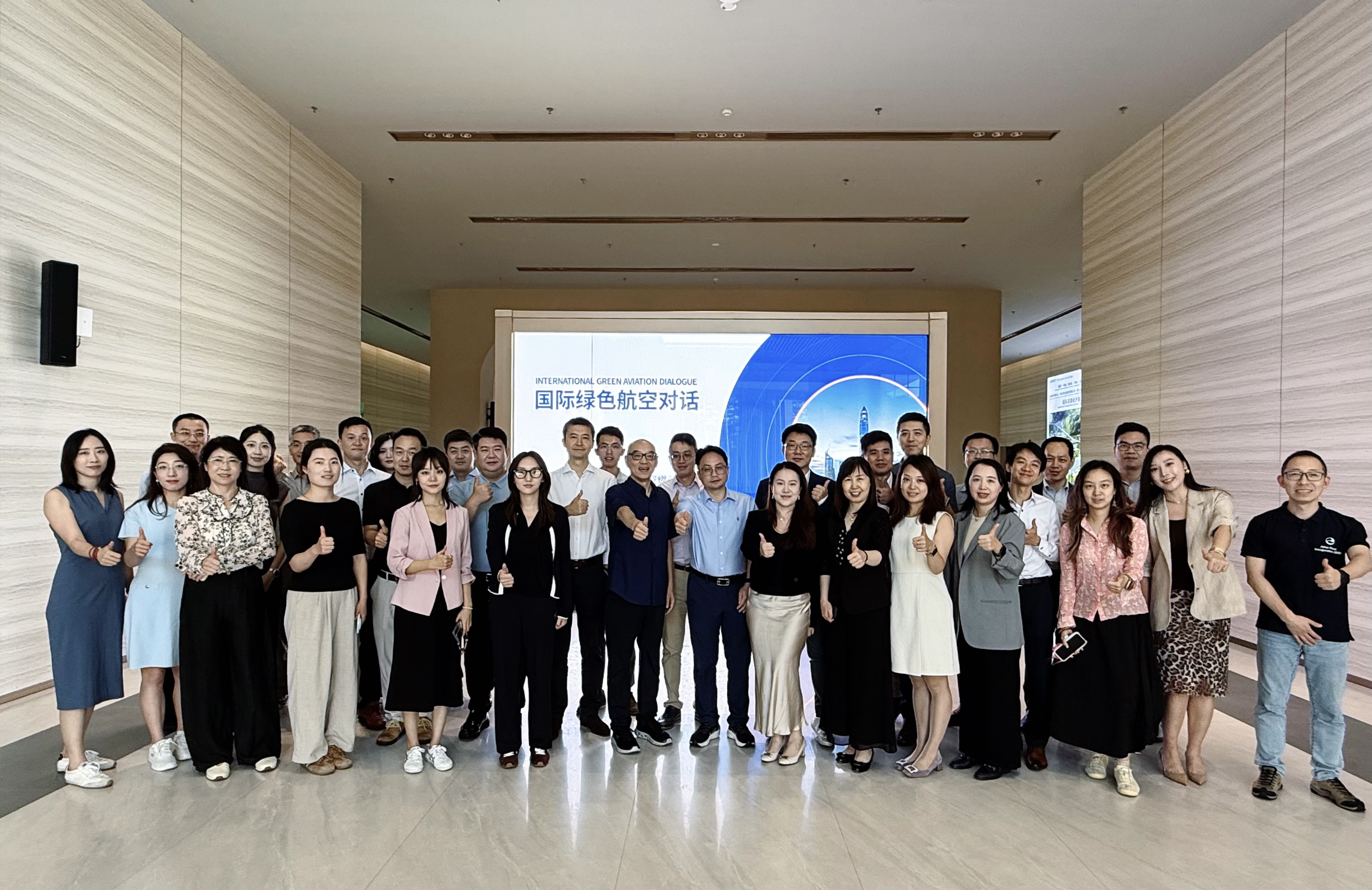
On July 22, 2026, the International Green Aviation Dialogue, titled “Building a Green Aviation Fuel Hub in the Guangdong–Hong Kong–Macao Greater Bay Area: Strategic Pathways for Green Aviation under Carbon Constraints,” was held in Shenzhen, China. Hosted by the Innovation Center for Energy and Transportation (iCET), the event brought together more than 40 experts and representatives from international aviation organizations, airlines, airports, aviation fuel suppliers, sustainable aviation fuel (SAF) producers, logistics companies, research institutions, and industry associations.
Participants held in-depth discussions on the evolution of international aviation emissions-reduction rules, the development of SAF supply systems in East and Southeast Asia, and pathways for establishing green aviation corridors and a green aviation fuel hub in the Guangdong–Hong Kong–Macao Greater Bay Area (GBA).
Opening Remarks
Dr. Feng An, Honorary Executive Director of iCET, delivered the opening remarks. He reviewed the development of the International Green Aviation Dialogue series and noted that, as international aviation emissions-reduction regimes such as CORSIA and ReFuelEU Aviation enter implementation, SAF is moving from a long-term aspiration to an immediate business issue affecting airlines’ fuel procurement, carbon costs, and competitiveness on international routes. The GBA is home to major airports in Guangzhou, Shenzhen, Hong Kong, and Macao. It brings together airlines, air cargo operators, aviation fuel suppliers, energy traders, green finance institutions, and advanced manufacturers, while actively developing SAF production and supply-chain capacity. These strengths give the region unique advantages in building a green aviation fuel hub. He emphasized that hub development should go beyond simply adding production capacity or building storage and transport facilities. It must connect the entire chain—from feedstocks, production, storage, transport, and fueling to certification and market use—while engaging airlines, airports, fuel suppliers, producers, cargo owners, and financial institutions in regional supply coordination, green aviation corridors, and mechanisms to share the green premium.
Jianhua Chen, Director of the Transportation Program at Energy Foundation China, also gave an opening remark. He stressed that achieving net-zero emissions in aviation is among the most challenging tasks in the transportation sector. It requires industry-wide consensus, pathways suited to China’s national circumstances, and stronger alignment with international aviation emissions-reduction mechanisms. With its world-class airport cluster, robust industrial base, and high degree of international connectivity, the GBA is well positioned to pioneer SAF use and green aviation fuel hub development. They expressed the hope that the dialogue would bring together diverse perspectives, clarify the GBA’s role and distinctive strengths in aviation’s net-zero transition, and inform future pilot projects and policy practice.
Keynote Presentations
Deng Liangchun, Senior Manager of External Affairs and Sustainability for North Asia at the International Air Transport Association (IATA), provided an update on the latest international aviation carbon-reduction rules. He noted that as CORSIA prepares to enter its second implementation phase, international aviation decarbonization requirements will impose considerable cost pressures on the global aviation industry. In response to unilateral measures such as the expansion of the EU carbon market, he argued that the international community should uphold CORSIA as the sole global market-based measure for addressing emissions from international aviation and avoid regulatory fragmentation that would increase the industry’s transition costs. Looking ahead, achieving net-zero aviation will require coordinated action across the entire value chain, with a focus on developing efficient and socioeconomically affordable emissions-reduction solutions. Sustainable aviation fuel (SAF) and eligible emissions units will provide essential support for airlines in meeting their climate targets and offer the industry a more stable pathway to compliance and greener development.
Liu He, a representative of the Operations Department/SAF Office of China National Aviation Fuel Group (CNAF), presented an overview of China’s SAF pilot programs and aviation fuel supply infrastructure. He explained that CNAF has been leveraging its nationwide aviation fuel supply network to advance SAF application pilots, gradually establishing an end-to-end operating model covering production and supply, transportation, airport delivery, and aircraft refueling. It has also explored efficient mechanisms such as book-and-claim, providing practical support for the large-scale deployment of SAF. China’s SAF supply system is now taking shape, with an initial three-tier capacity structure comprising certified projects, projects awaiting certification, and projects under construction or in the planning stage. Regarding the development of a green aviation fuel hub in the Guangdong–Hong Kong–Macao Greater Bay Area, he noted that the region combines the advantages of major aviation hubs, a strong industrial base, and substantial market demand. Going forward, the Greater Bay Area should strengthen industrial coordination, align standards, expand international cooperation, and continue improving its airport supply network, standards framework, and digital management capabilities to jointly advance the high-quality development of the green aviation fuel industry.
Willis Wei, Climate Change and SAF Manager at Cathay Pacific, shared the airline’s experience with SAF procurement and use, as well as international carbon constraints. He explained that SAF is the most important pathway for achieving deep emissions reductions in aviation, and its large-scale development requires participation throughout the upstream and downstream value chain. Cathay has explored the entire SAF value chain—from production and procurement to delivery, use, and future deployment—while supporting industry development through initiatives such as a dedicated SAF investment fund and long-term offtake agreements. It has also continued to expand opportunities for corporate customers to address their Scope 3 emissions. In 2025, Cathay used more than 36,000 tonnes of SAF worldwide and worked with Sinopec, CNAF, and other companies to pilot a model involving production in mainland China and refueling overseas. In his view, the Greater Bay Area possesses strong advantages in aviation connectivity, industrial capacity, and geographic location. As SAF projects in Guangzhou and Dongguan advance, the region is expected to strengthen its ability to supply the broader airport cluster. The next step is to enhance regional coordination and explore development pathways covering SAF feedstock supply, blending, appropriate mechanisms for establishing a green premium, and business-model innovation. These efforts will be essential to building a robust green aviation ecosystem in the Greater Bay Area.
Gabriel Ho, Founder and Chief Strategy Officer of the Asia Sustainable Aviation Fuel Association (ASAFA), presented the current state and emerging trends of SAF policies across the Asia-Pacific region. Singapore, Japan, South Korea, Thailand, and other economies are introducing SAF targets and support mechanisms, accelerating the formation of a diverse regional policy framework and gradually activating the regional market. He emphasized that scaling up SAF requires coordinated action across policy, standards, supply chains, and finance. Establishing stable market demand and a predictable investment environment is essential to reducing uncertainty for the industry. Singapore, for example, has set SAF usage targets and established centralized procurement mechanisms and an SAF fund, offering a useful reference for aviation hubs seeking market-based development pathways. Looking ahead, Asian economies should strengthen policy coordination, mutual recognition of standards, and industrial cooperation to improve the regional SAF supply system and accelerate aviation’s transition toward net-zero emissions.
Hu Yong, Director of EcoCeres, presented the latest progress in building the Greater Bay Area’s green aviation fuel value chain, drawing on the company’s SAF project in Dongguan. He noted that scaling up SAF requires not only continued expansion of production capacity but also an integrated value chain covering feedstock supply, fuel production, transportation, storage, blending, and end use. As a leading global producer of sustainable aviation fuel, EcoCeres has established stable, large-scale SAF production capacity and is actively developing next-generation SAF technologies. The company is currently advancing the construction of a production base in Dongguan with an annual capacity of approximately 450,000 tonnes of SAF and hydrotreated vegetable oil (HVO). In parallel, it is improving its traceability system for used cooking oil, developing a regional feedstock supply network, and planning supporting facilities such as an SAF blending facility in Hong Kong. Through these efforts, EcoCeres is exploring an integrated supply model spanning feedstock collection, fuel production, and airport delivery. Hu emphasized that reducing SAF costs is critical to the industry’s long-term development. The company will continue improving SAF economics through technological innovation, supply-chain optimization, and new business models, thereby providing strong support for aviation emissions reductions at scale.
High-Level Dialogue: Building Consensus on a GBA Green Aviation Fuel Hub
Zhiyuan Yang, Director of the Sustainable Aviation Fuel Development Research Center at the Second Research Institute of the Civil Aviation Administration of China (CAAC), moderated the high-level dialogue. He said China’s SAF industry is at a pivotal stage in moving from demonstration to scaled deployment. Although domestic capacity plans are advancing quickly, development should not pursue capacity expansion alone; it must balance sustainable feedstock resources, stable plant operations, and market demand. Cost reduction remains the central challenge. Optimizing feedstock collection, storage, and transport; diversifying technology pathways; and monetizing environmental attributes can help reduce the green premium. As a major aviation market, the GBA must also strengthen localized supply capacity, attract more reliable production projects, and create a regional ecosystem in which supply and demand develop together.
In the discussion on airlines’ green-transition challenges under international carbon constraints, Yuanwu Jiang of All Nippon Airways’ Corporate Strategy Division, Lei Zhong of SF Express’s Green Innovation Project Team, Jinjin Xu, Head of Sustainability for Boeing China, Hanyang Wei of Cathay Pacific, and Chaogang Tian, Chief Representative in Chengdu for Lufthansa Cargo, offered perspectives from airline operations, freight logistics, aircraft manufacturing, and international regulation. Participants agreed that stronger international rules require the aviation sector to rethink how transition costs are shared. Airlines should not bear the SAF premium alone; governments, companies, cargo owners, and passengers should all participate. SAF is also evolving from a pure emissions-reduction tool into an important source of corporate supply-chain competitiveness. Better carbon accounting, environmental-attribute trading, and mutual recognition of international certification will be needed to unlock its market value.
In the discussion on pathways for developing a GBA green aviation fuel hub, Merlin Lao, Head of Policy and Research at the Business Environment Council and a representative of the Hong Kong Sustainable Aviation Fuel Coalition Secretariat; Yue Ren, Director of Public Affairs at DHL; Shutong Liu, Director of Partnerships at ASAFA; Lanting Wu, Strategic and Commercialization Principal Analyst at Envision Energy; and Yuan Yao, Deputy Director of the SAF Office at CNAF Petroleum, examined the region’s advantages, supply system, use cases, and opportunities for international cooperation. Participants emphasized that the hub’s success depends not only on production capacity but on connecting the full chain from feedstocks, production, storage, transport, and fueling to market adoption and value realization. With its role as an international aviation gateway, industrial base, and resource advantages, the GBA could pursue a model of “regional production, hub-based use, and international connectivity.” Challenges remain, including high costs and unstable feedstock supply. The region should standardize the collection, storage, and transport of waste oils, improve supply-chain transparency and traceability, strengthen storage and fueling facilities, promote mutual recognition of certification, and explore mechanisms for sharing the green premium and trading environmental attributes.
The meeting concluded after a lively discussion and broad consensus. Participants agreed that, as international aviation emissions-reduction rules continue to evolve, SAF supply capacity is becoming an important component of a hub’s green competitiveness. Leveraging its international aviation network, value-chain foundations, and openness to cooperation, the GBA can develop a hub system spanning fuel production, secure supply, storage and fueling, green certification, and international cooperation—creating regional practices that can be replicated and scaled elsewhere in China.
Conclusion
This workshop was the fourth thematic event under iCET’s International Green Aviation Dialogue mechanism. Focusing on development of a green aviation fuel hub in the GBA, it examined regional opportunities and challenges through the lenses of international rules, market demand, supply systems, and industry practice. Going forward, iCET will continue to use this dialogue mechanism to build a cross-sectoral, cross-regional, and international platform for exchange and cooperation on green aviation fuels, aviation emissions-reduction rules, green aviation corridors, and international collaboration. The goal is to develop policy recommendations with practical value and contribute think-tank expertise to China’s aviation net-zero transition and global aviation decarbonization cooperation.