NEV-CAFC Dual-Credit Policies

As an independent think tank, iCET is committed to systematically introducing internationally advanced policy experiences to China and promoting their adaptation and application in the local context. California has implemented the Zero Emission Vehicle (ZEV) program since the 1990s. Through a market-based system centered on mandatory credit trading (rather than direct fiscal subsidies), it has effectively promoted the commercialization of zero-emission vehicles, accelerating technological innovation while achieving emission control, making California a pioneering region for global electric vehicle development.
Since 2013, iCET has taken the lead in systematically introducing the ZEV program in China and organized thematic demonstration and exchange activities in Shenzhen and Beijing in 2015, conducting in-depth discussions on policy design logic, implementation conditions, and pathways for synergy with China's existing policy system. The relevant research provided important references for the localization of China's new energy vehicle policies. In September 2017, the Ministry of Industry and Information Technology issued the Parallel Management Method for Corporate Average Fuel Consumption and New Energy Vehicle Credits for Passenger Vehicle Enterprises (the "Dual Credit" policy), marking China's official establishment of a new energy vehicle incentive mechanism centered on credit management.
During the policy consultation phase, several key recommendations proposed by iCET were adopted, including that new energy vehicle credits should not be calculated solely based on driving range but should also comprehensively consider technical indicators such as energy consumption levels and charging performance; and that mechanisms such as a "credit pool" should be used to enhance the system's flexibility and long-term stability. These concepts were further reflected in the 2023 revision of the Dual Credit policy. Since its implementation, the Dual Credit policy has become one of the core institutional tools driving the electrification transformation of passenger vehicles in China.
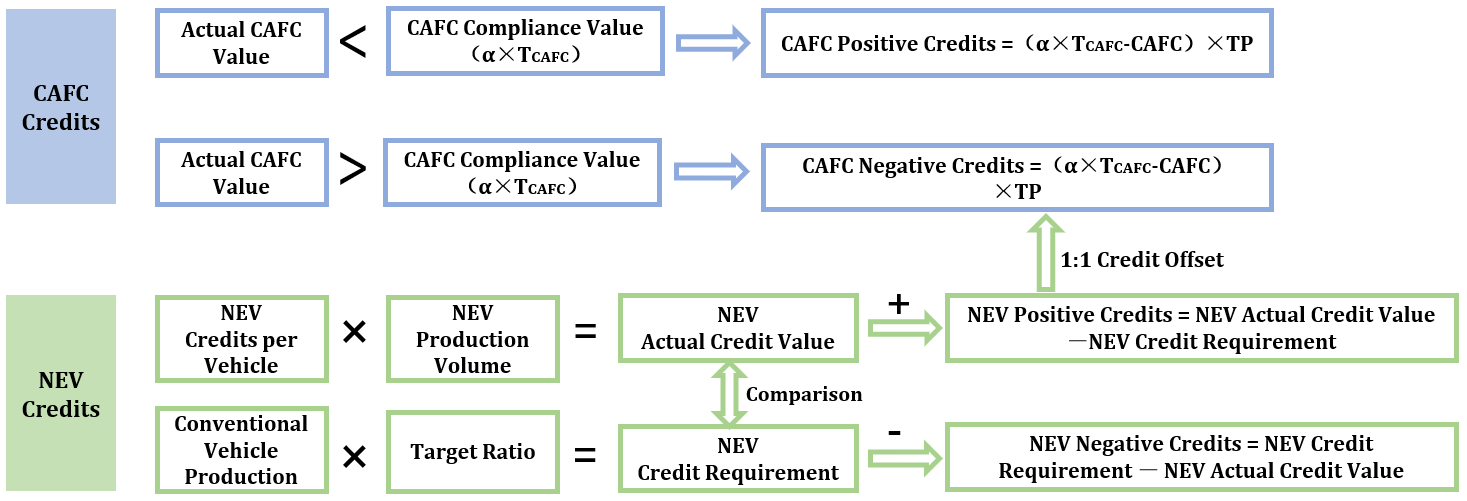
Following the policy's implementation, iCET has continuously tracked its effectiveness, regularly releasing the China Passenger Vehicle Dual Credit Research Report series, conducting scenario simulations and quantitative analyses, and providing independent, professional think tank support for the continuous optimization of the system and healthy industrial development through policy commentary and exchange activities.