Roadmap for Phasing-out Traditional ICE Vehicles

The phased replacement and phase-out of conventional fuel vehicles, and the establishment of a phase-out timeline, is a powerful means to promote vehicle electrification. Since 2016, numerous countries and regions around the world have successively proposed plans to ban the sale of fuel vehicles. Within the framework of the "China Oil Consumption Cap and Policy Research" project, focusing on the automotive industry and based on a review of global and domestic fuel vehicle ban policies and trends, iCET innovatively proposed a tiered, vehicle-category-based, and phased timeline and schedule for phasing out traditional fuel vehicles in China. The project also assessed the environmental benefits of this process, providing reference and support for the formulation of macro-level fuel vehicle ban policies and roadmaps, and promoting the low-carbon and electrification transition of the automotive industry.
China’s First Quantitative Roadmap for the Phase-Out of Conventional Internal Combustion Engine Vehicles
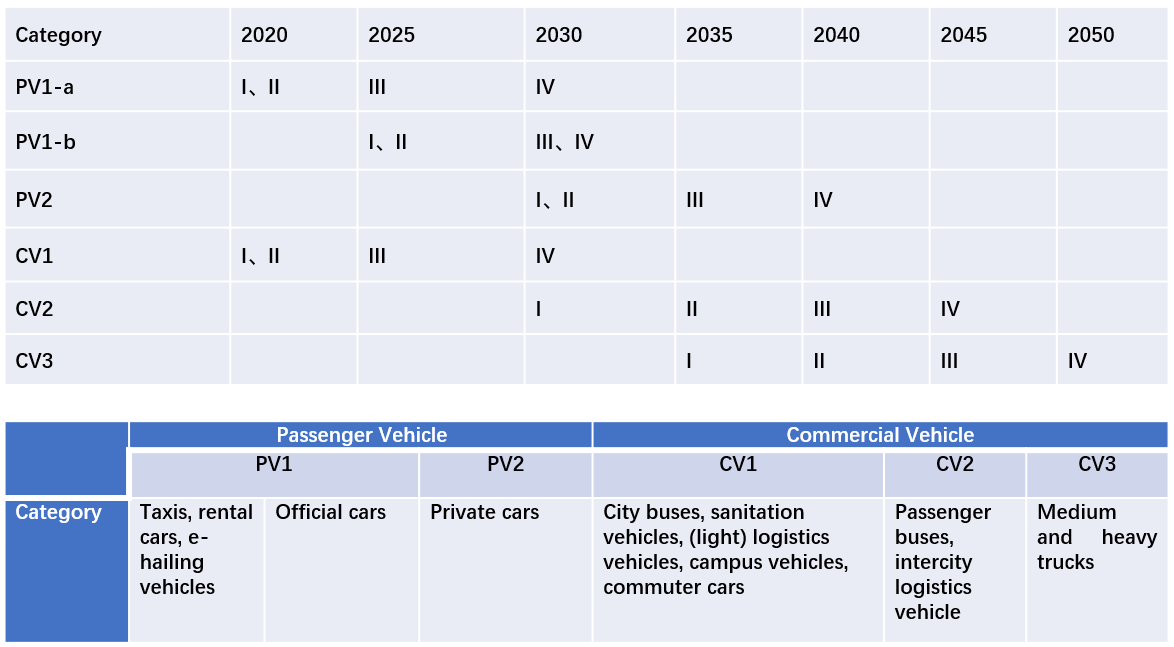
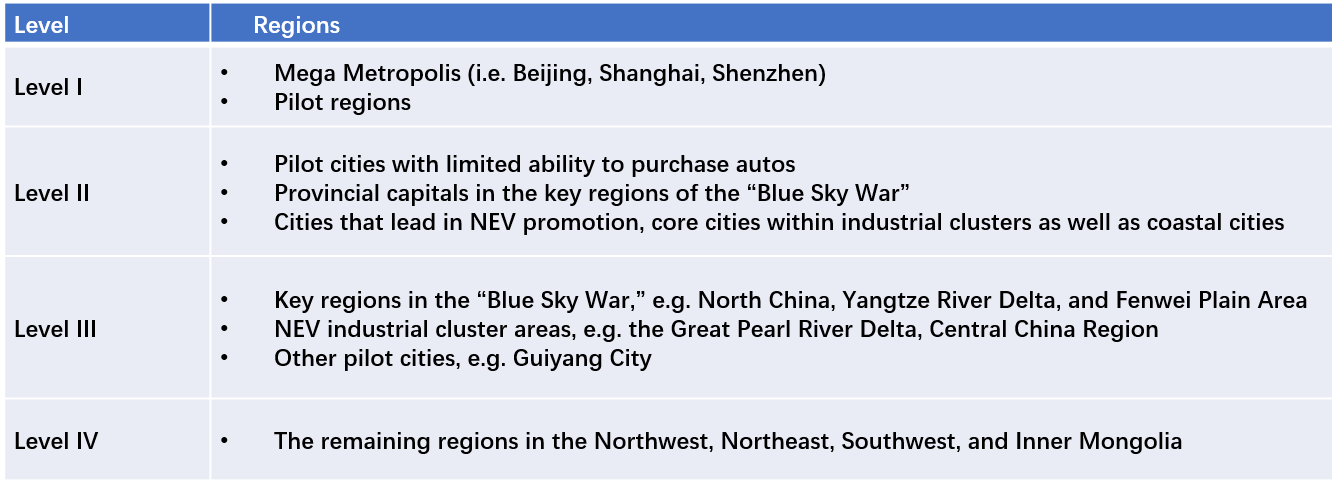
Based on the targets of "a 55% and 80% reduction in automotive fuel consumption from the peak by 2040 and 2050, respectively," the project established a "China Automotive Development 2050 Future Scenario" and accordingly proposed a tiered, vehicle-category-based, and phased timeline for phasing out traditional fuel vehicles.
Framework for the Replacement and Phase-Out of Conventional ICE Vehicles
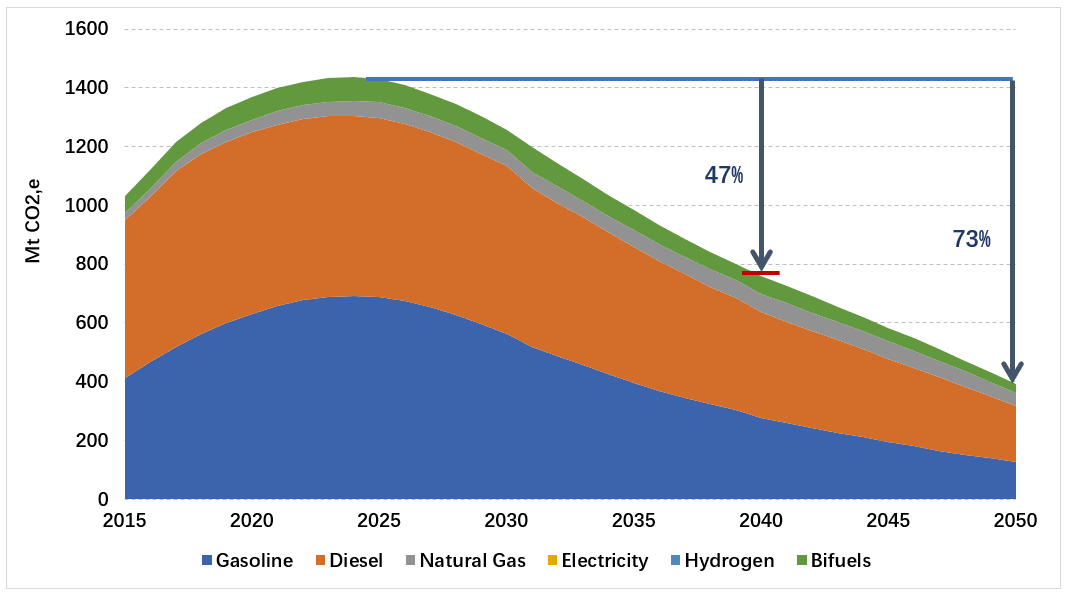
Based on this timeline, China's vehicle fleet can achieve significant carbon emission reductions: tailpipe greenhouse gas emissions from the overall fleet are projected to peak in 2024, and by 2040 and 2050, tailpipe greenhouse gas emission levels will decrease by 47% and 73% respectively compared to the peak.
Impact on Fleet Tailpipe CO₂ Emissions
Following the release of the Timeline for Phasing Out Traditional Fuel Vehicles in China report, which sparked heated discussion, the Ministry of Industry and Information Technology responded to relevant proposals, stating that it would "make overall plans to study and formulate a phase-out timeline for fuel vehicles."