Sustainable Aviation Fuel (SAF)
The aviation industry is widely recognized as one of the hard-to-abate sectors. As the process of comprehensive electrification transformation of road transportation advances, the aviation industry is poised to become one of the main sources of emissions from the transportation sector in the future. Organizations such as IATA and ICAO have stated that under current technological conditions, the use of Sustainable Aviation Fuel (SAF) is the primary means to help the international aviation industry achieve net-zero carbon emissions. China is the world's second-largest air transport market and is set to become a significant participant in the international SAF market in the future.
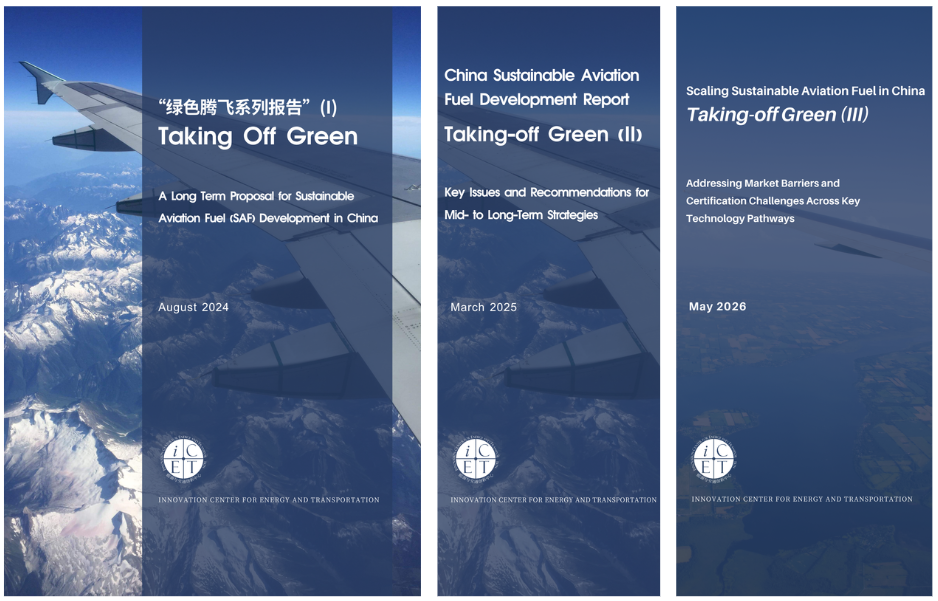
SAF production pathways are diverse, with overlapping technical challenges, high production costs, and cumbersome certification processes; establishing a complete SAF supply chain is no easy task. To this end, since 2024, iCET has initiated the "Green Takeoff" research series, conducting in-depth analysis of the key challenges facing China's SAF medium- and long-term development from a domestic perspective, and proposing solutions and recommendations.
To build consensus, mobilize efforts, and jointly promote change, iCET has also collaborated with partner organizations to organize industry exchange seminars on sustainable fuels, focusing on key industry issues and jointly seeking development pathways. The consensus and policy recommendations from these meetings have also been submitted through relevant channels to regulatory authorities such as the National Energy Administration, providing references for the formulation of the 15th Five-Year Plan.
Looking ahead, iCET's sustainable fuel research series will not only continue to delve into SAF issues but will also expand to areas such as green shipping fuels, helping the aviation and shipping sectors achieve continuous decarbonization.
Currently, iCET has completed the following research reports: